The beasts that hold up the sky
Four of them guard the four directions. Three more arrive when something good happens. And then there's what lives in the mountains — which is where it gets strange.
四灵 · The four divine beasts
One per direction, one per season, one per element — and together they run the entire Chinese system of orientation.
The idea is older than the artwork. Chinese astronomers split the night sky into twenty-eight lunar mansions (二十八宿) and grouped them into four sets of seven, one set per direction. The star patterns looked enough like animals that the constellations got their names first — the mythology arrived afterwards to explain them.
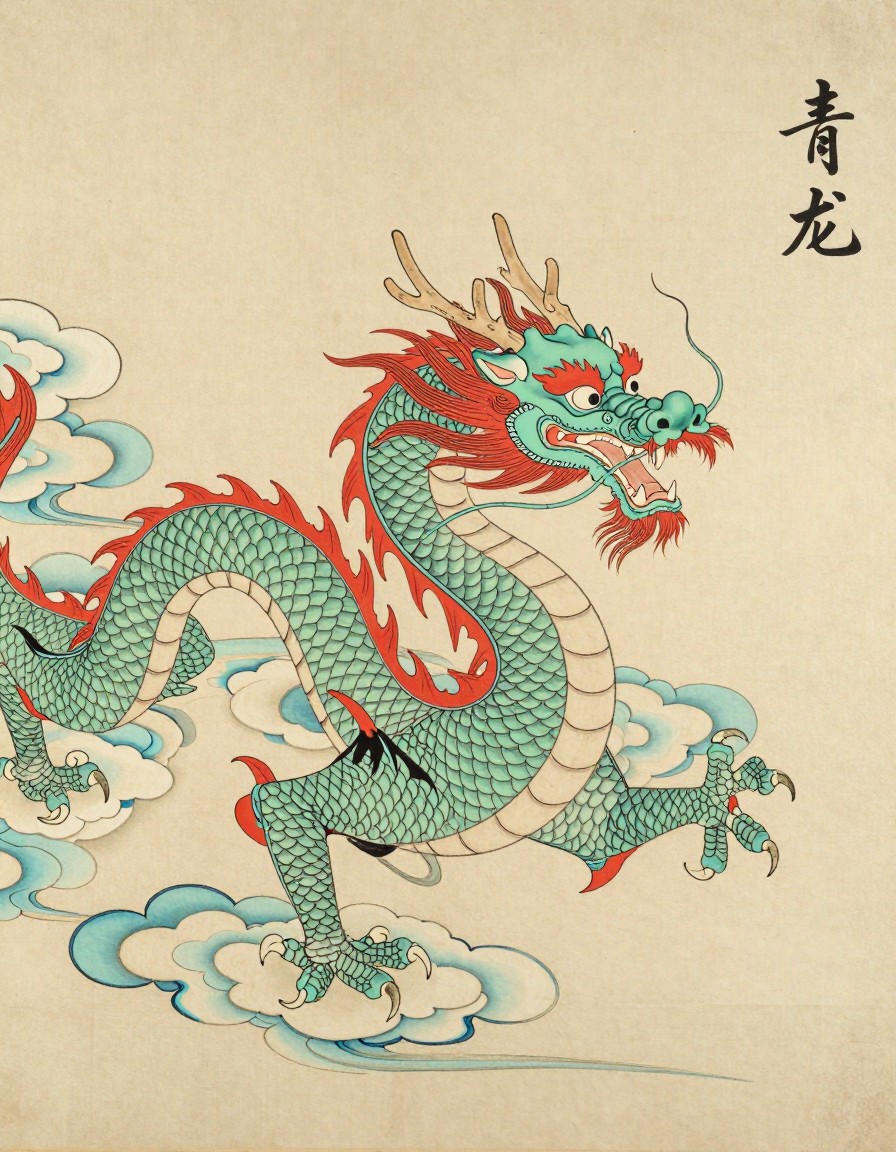
Azure Dragon
First of the four, and the one that became the emperor's own emblem. Its body is assembled from nine animals — a composite creature, because no single animal was impressive enough. Paired with the tiger in the phrase 云从龙,风从虎: clouds follow the dragon, wind follows the tiger.
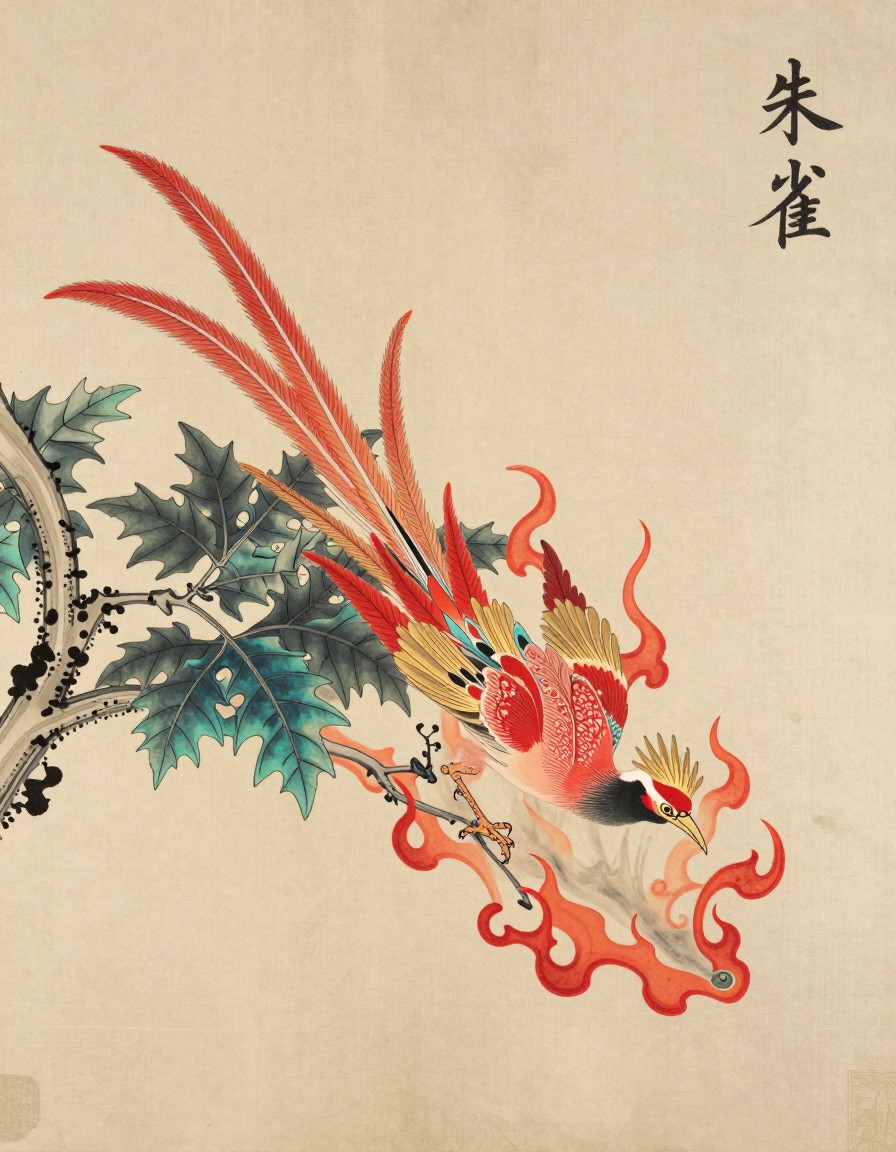
Vermilion Bird
Constantly mistaken for the phoenix, and the confusion is old enough to be defensible. The real difference: the phoenix appears when the world is at peace; the vermilion bird is a directional deity of fire that turns up whether you're at peace or not. Same body plan, different job description.
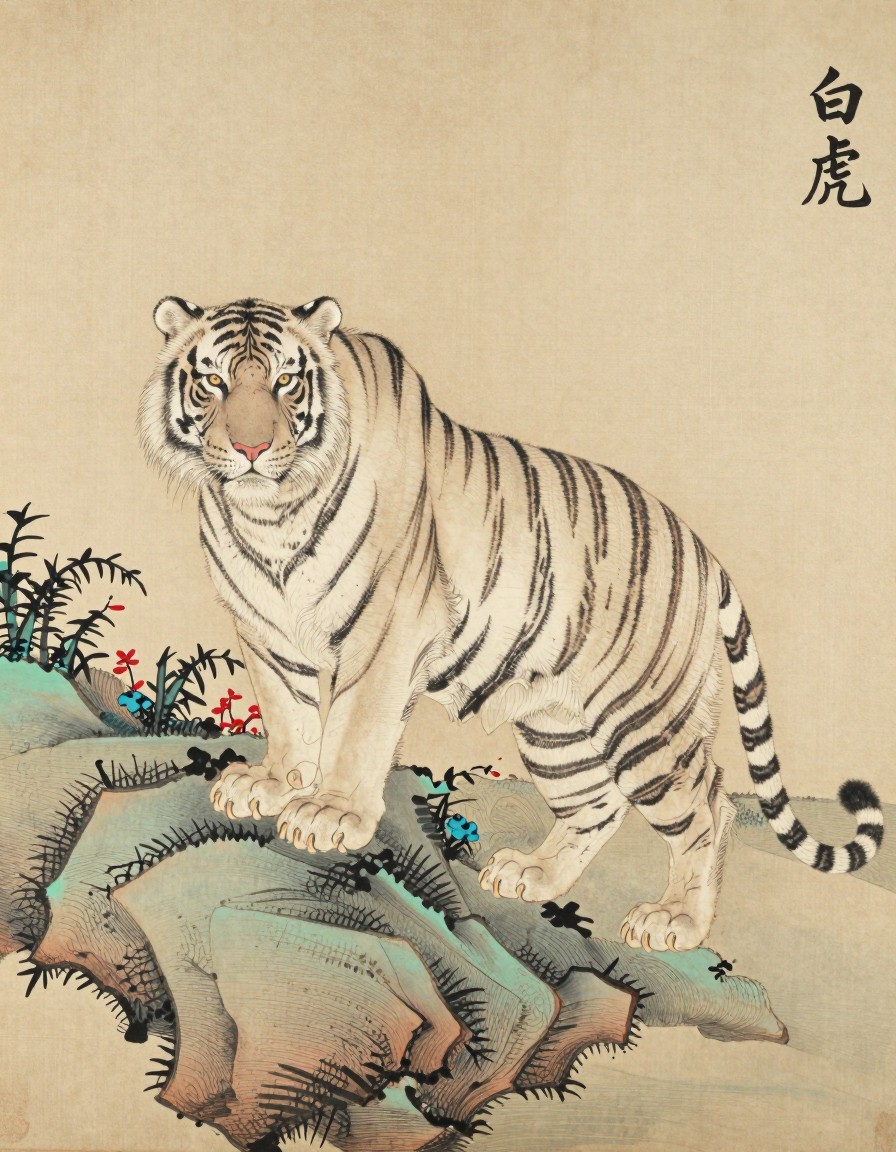
White Tiger
White is the mourning colour, but this is not a mournful beast — it is a killer pointed at the right target. White tigers were painted on gates and tomb doors to eat demons, and in Han belief the tiger was god of war and of punishment. Which is why it guards the west: the direction things go to die.
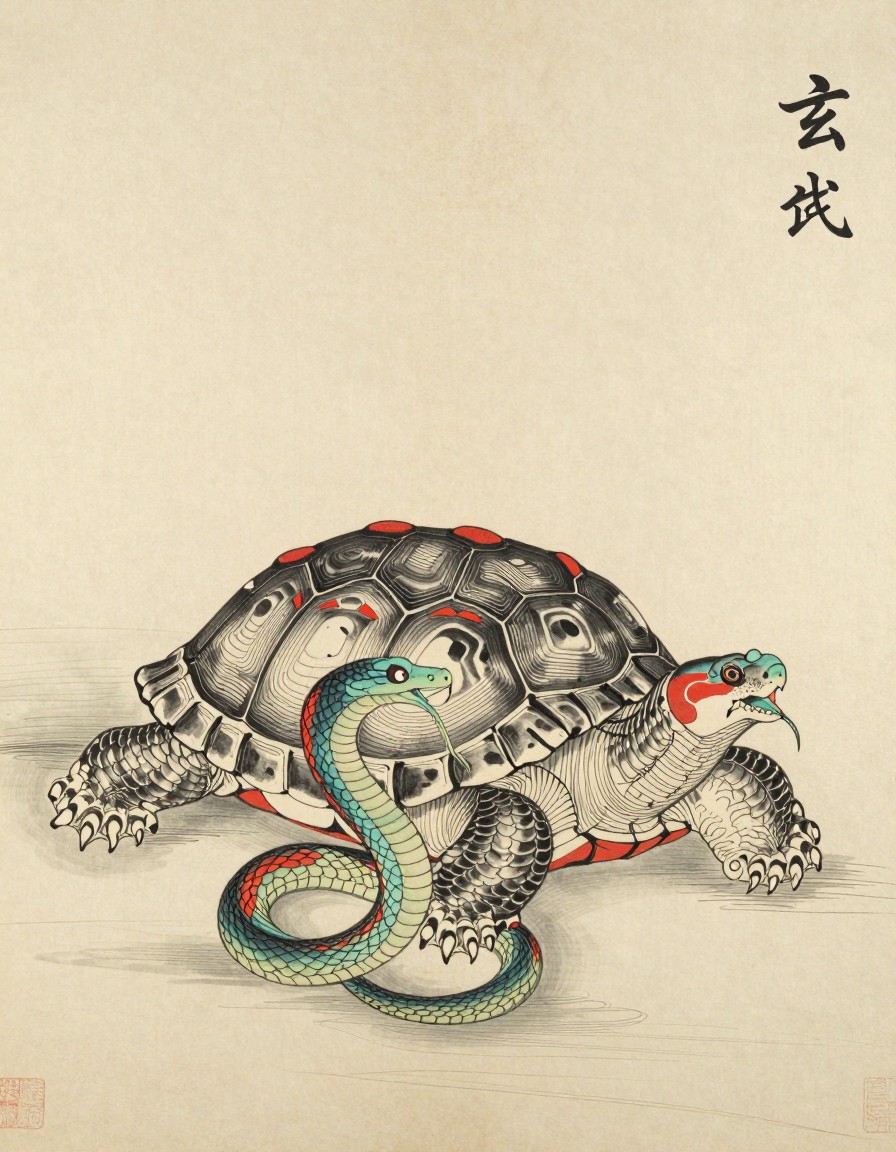
Black Tortoise
A tortoise with a snake wrapped around it — the northern winter constellation, and the strangest of the four to look at. The tortoise carries the divination tradition: oracle bones were turtle shells, cracked by heat and read. In Taoism, 玄武 later became 真武大帝, a major deity in his own right.
The ones that arrive with good news
Not tied to a direction. These three show up when something worth showing up for happens — a sage born, a just ruler enthroned, the world briefly at peace.
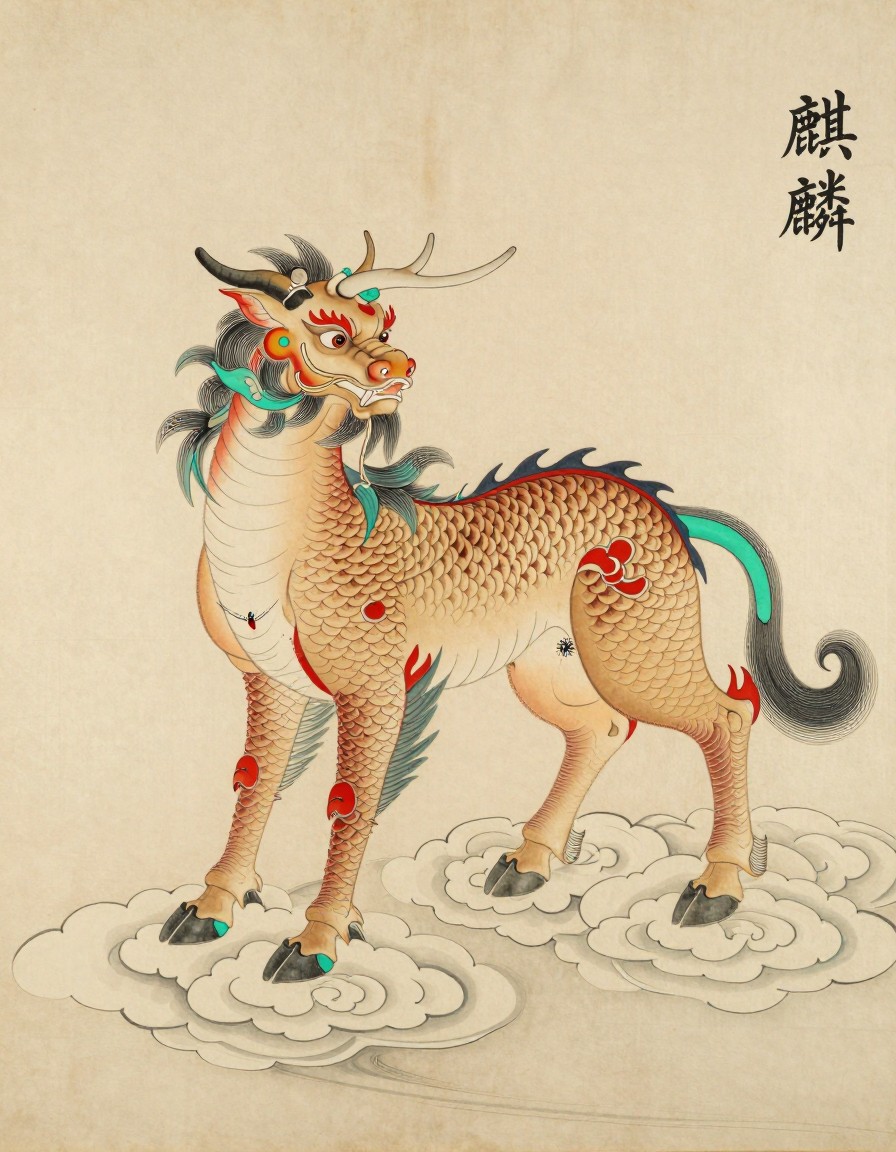
Qilin
Deer body, ox tail, horse hooves, fish scales, a single horn. It is said to step around living insects and to avoid trampling growing grass — benevolence built into the anatomy. One was reportedly caught in 481 BC, and Confucius is said to have put down his brush and stopped writing the 春秋 because of it.
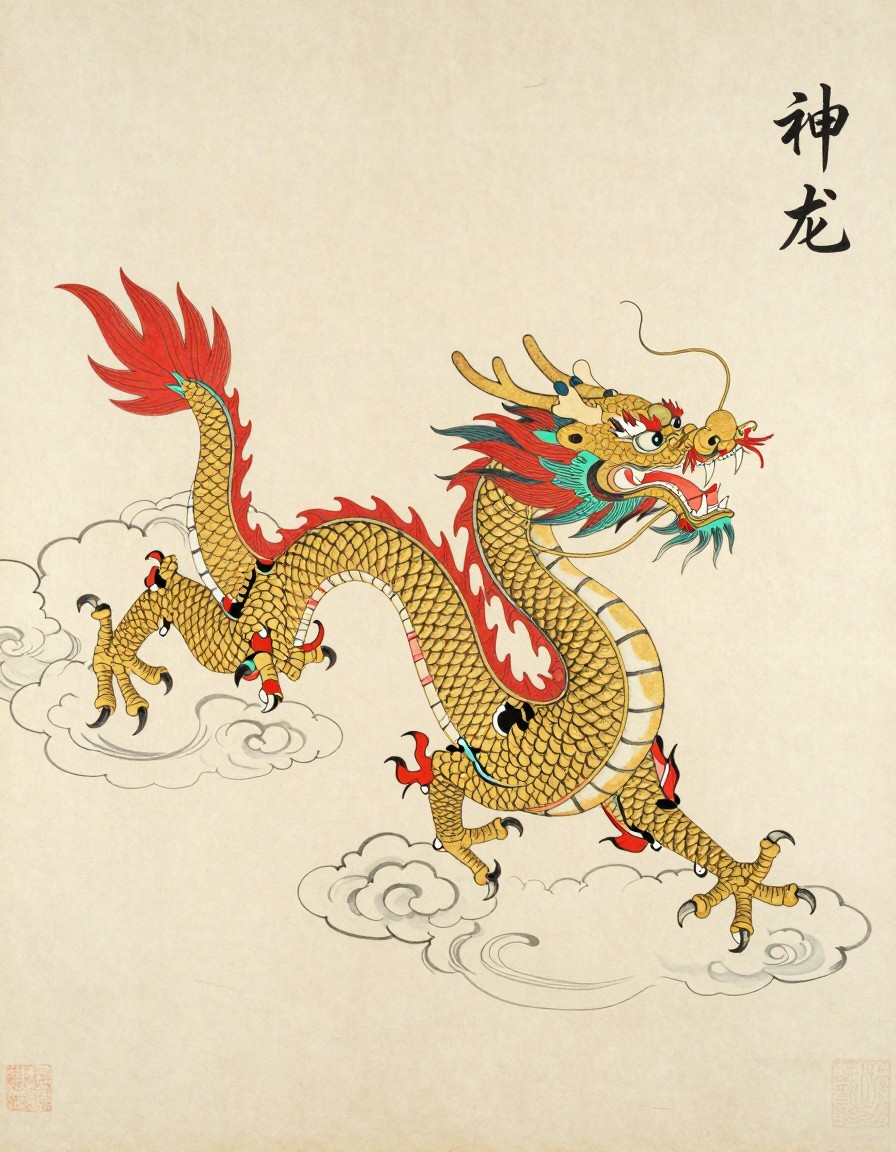
The Dragon
Not the western monster. The Chinese dragon is a water deity — it makes rain, owns the rivers, drags in storms. Because it was imperial, the claw count became law: five claws for the emperor, four for princes, three for everybody else. The old "nine resemblances" formula lists its parts — deer antlers, camel head, rabbit eyes, snake neck.
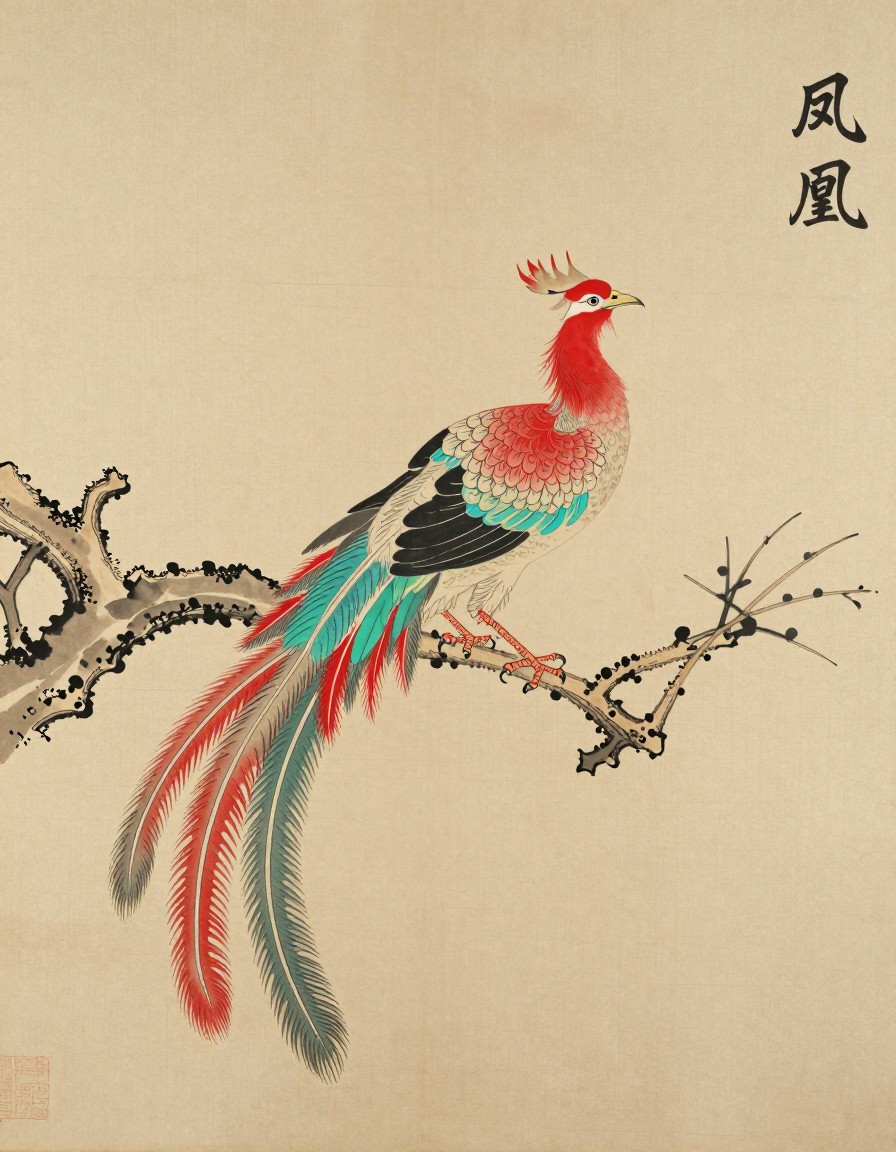
Fenghuang
凤 is the male, 凰 the female, and it appears when a virtuous ruler takes the throne — or, in some tellings, when one dies. Its five colours stand for the five virtues: 德, 义, 礼, 仁, 信. Every other bird is supposed to turn and face it, which is where 百鸟朝凤 comes from.
What's in the mountains
The Classic of Mountains and Seas is a compilation from the Warring States to the early Han — about 31,000 characters cataloguing mountains, rivers, foreign tribes, and the things living on them.
四凶 · The four calamities
Four beasts the tradition agreed were bad news. Each one is a personality flaw with teeth attached.
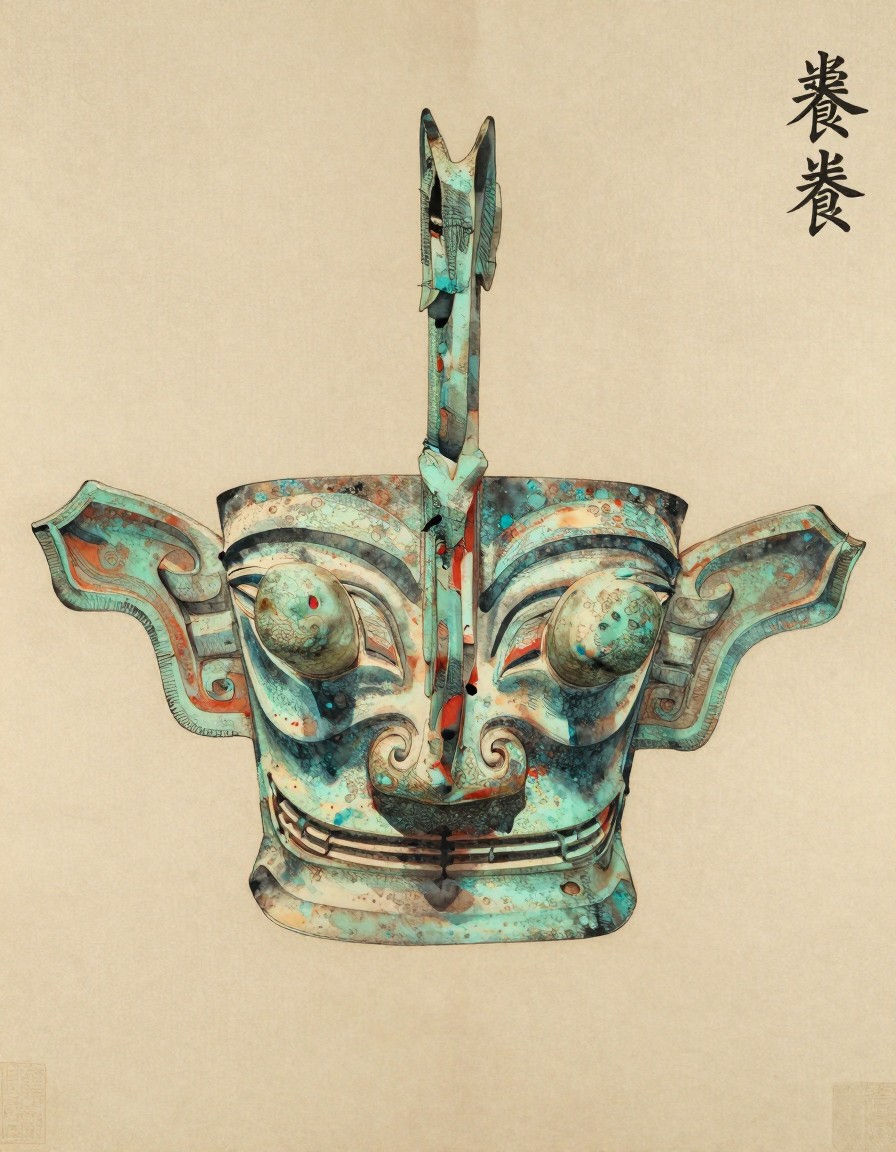
Taotie
Said to eat people without bothering to swallow them — the damage is done before the meal is. Its face became the most famous pattern in Chinese art: the taotie mask on Shang and Zhou bronze vessels, staring out from ritual tripods for three thousand years. Today the word just means "glutton".
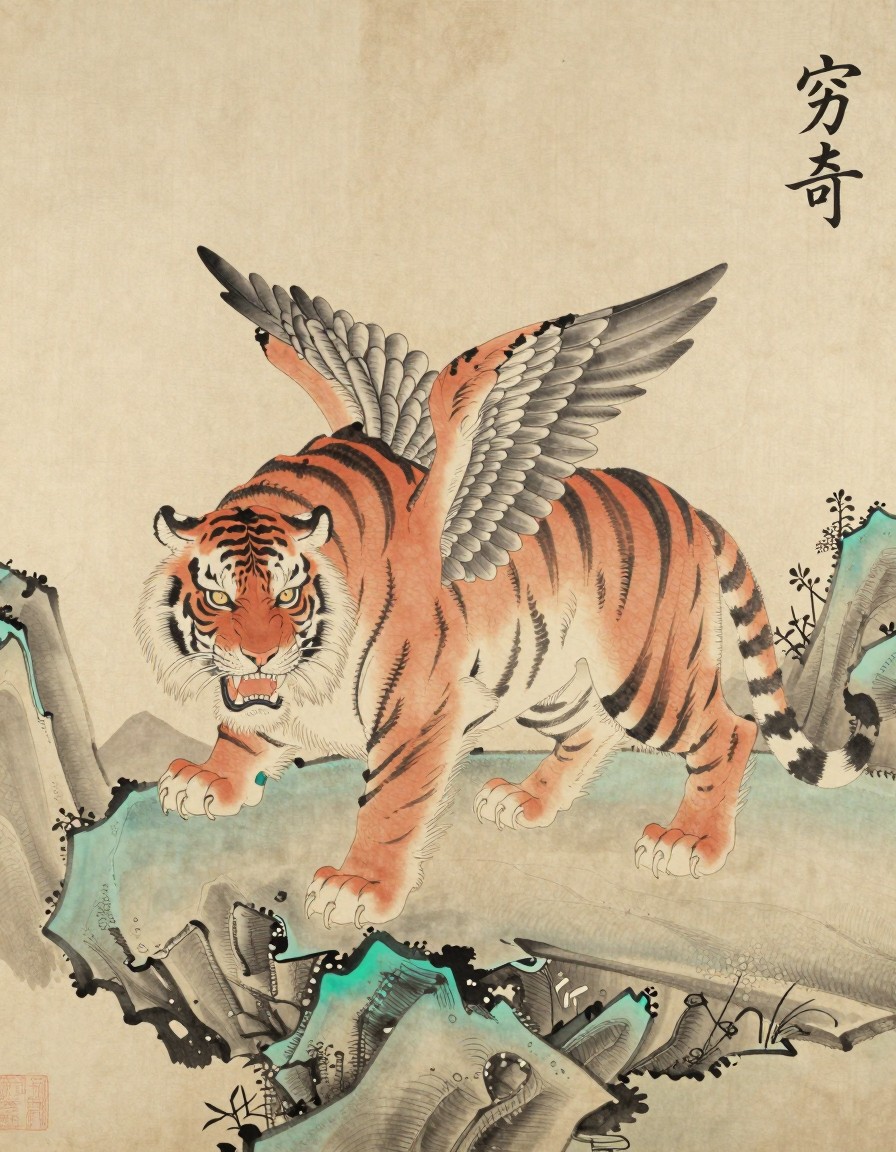
Qiongqi
The texts can't agree on what it looks like — one passage calls it ox-shaped with hedgehog fur, another says a winged tiger. Both agree it eats people starting from the head, and on its signature habit: it listens to arguments and eats whoever turns out to be in the right. A beast built to punish the honest party.
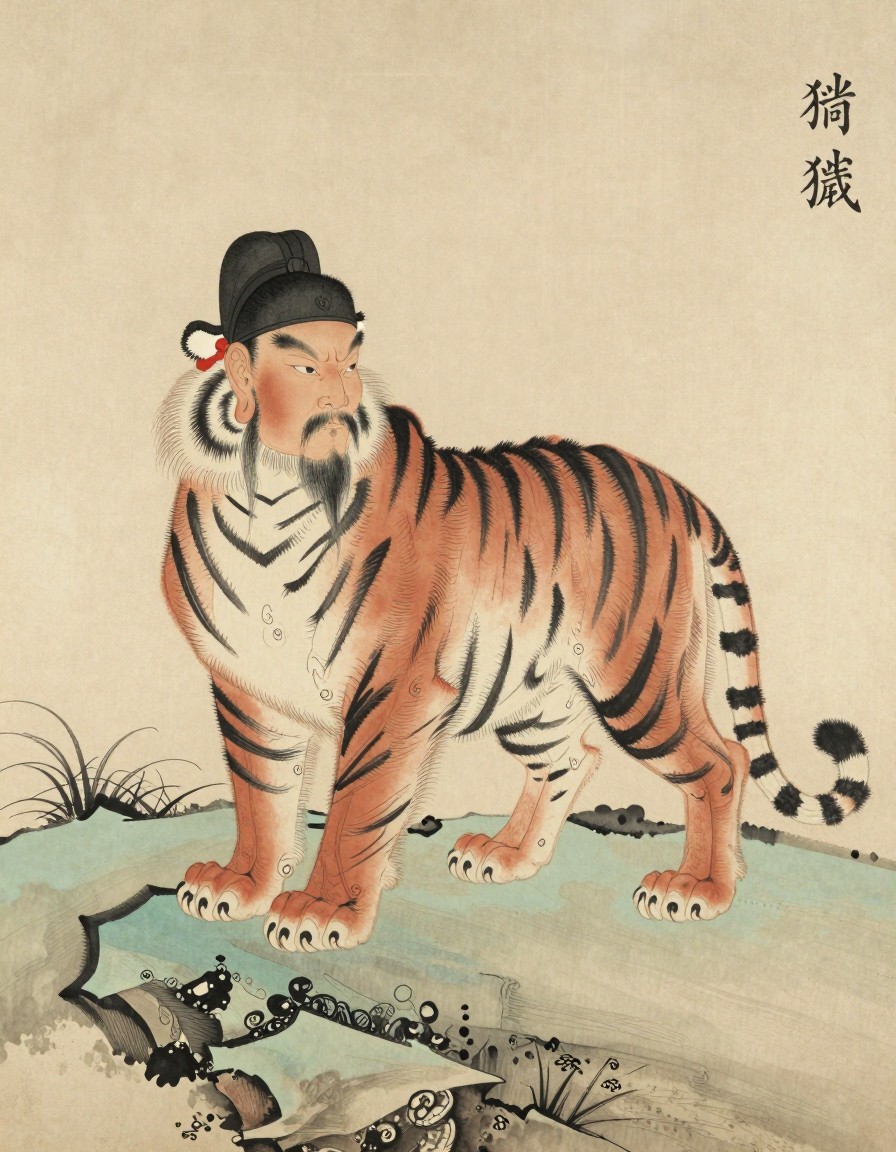
Taowu
Tiger body, human face, pig's teeth. The name turned into an insult for someone who cannot be taught anything at all — old texts use 梼杌 for both the animal and the nobleman's son who ignores every lesson he's given.
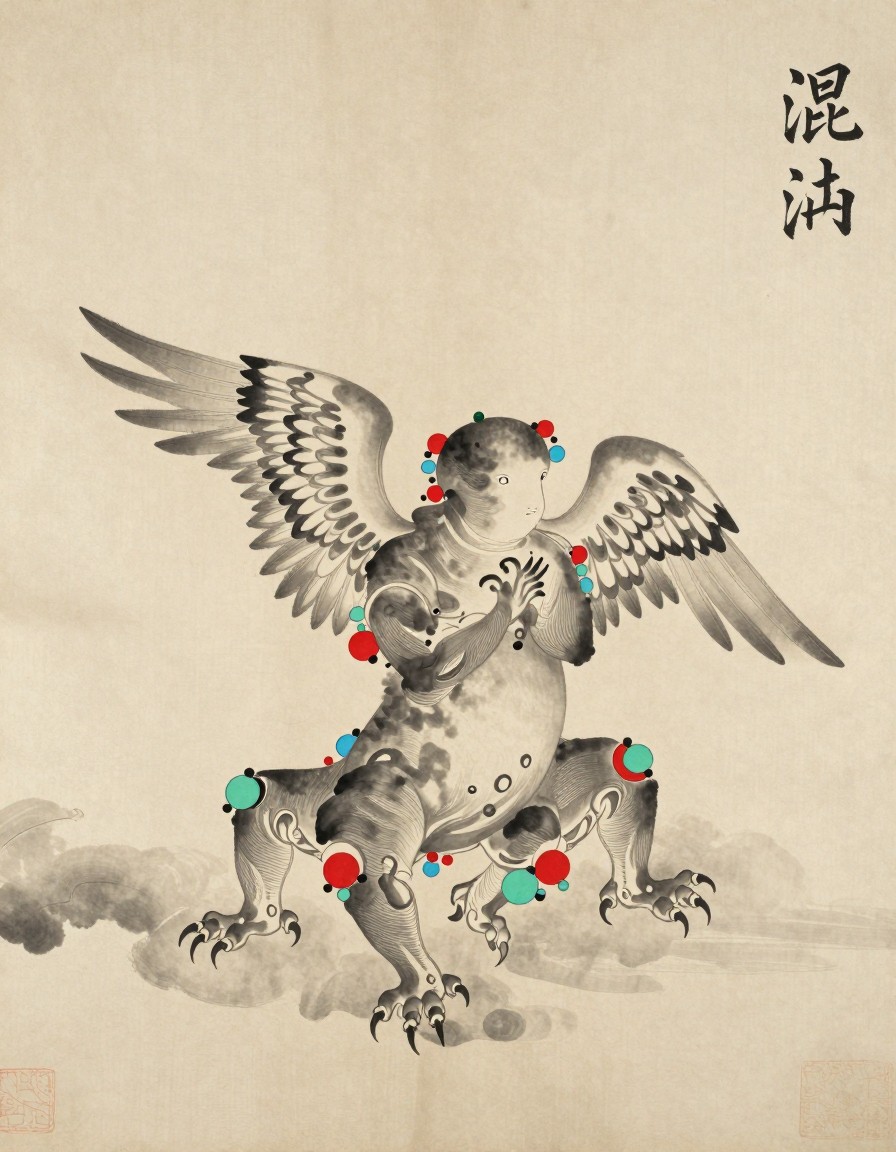
Hundun
A faceless, rounded creature with six legs and four wings, like a lump of mist. In the 庄子 it is the emperor of the centre, and it dies when two neighbours try to be helpful and bore seven openings into it over seven days. The point of that story is the helpfulness.
And the rest of the catalogue
Not disasters — just strange, and in two cases far stranger than their later reputations suggest.
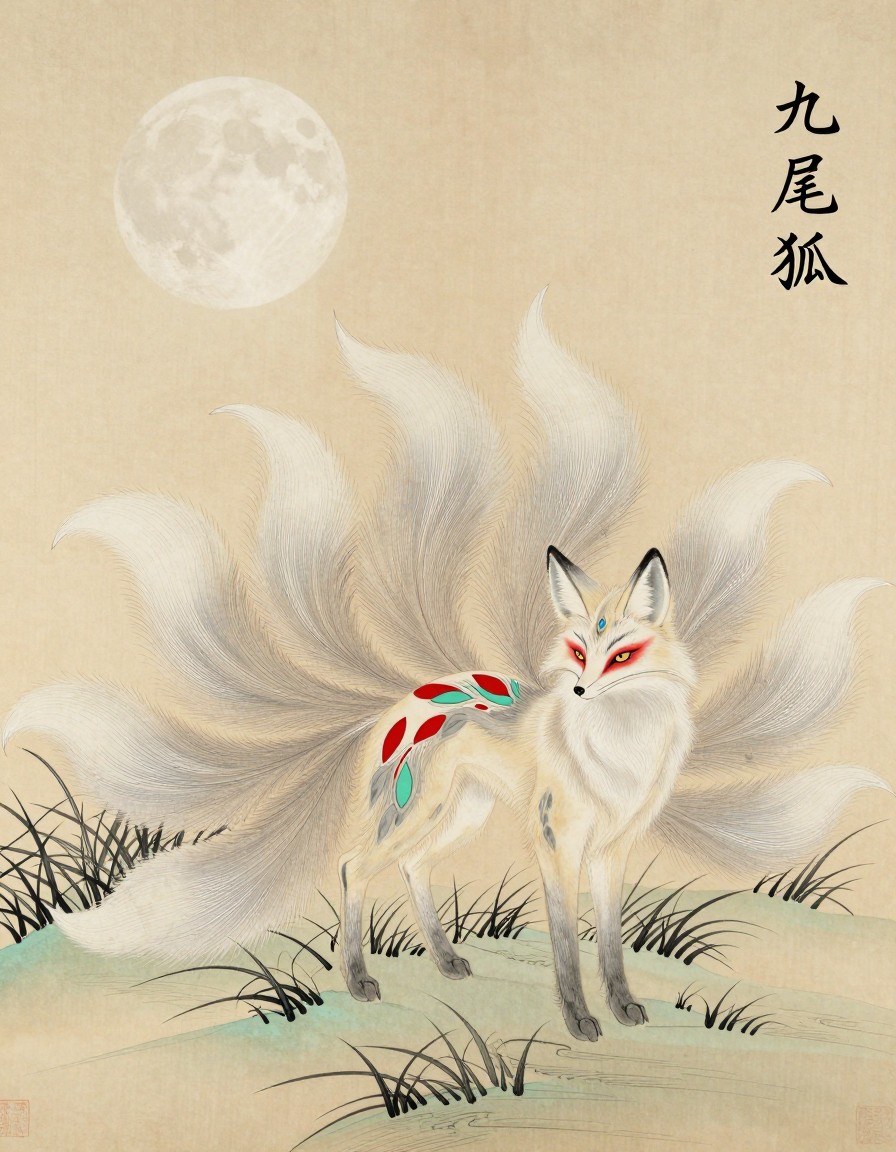
Nine-tailed fox
In the 山海经 it is not seductive — it is dangerous. It has the voice of a human infant, and it eats people. Over the next two thousand years it became instead the beautiful shape-shifter of the Six Dynasties tales and 封神演义. The meaning flipped completely: the nine tails that once meant "predator" now mean "temptation".
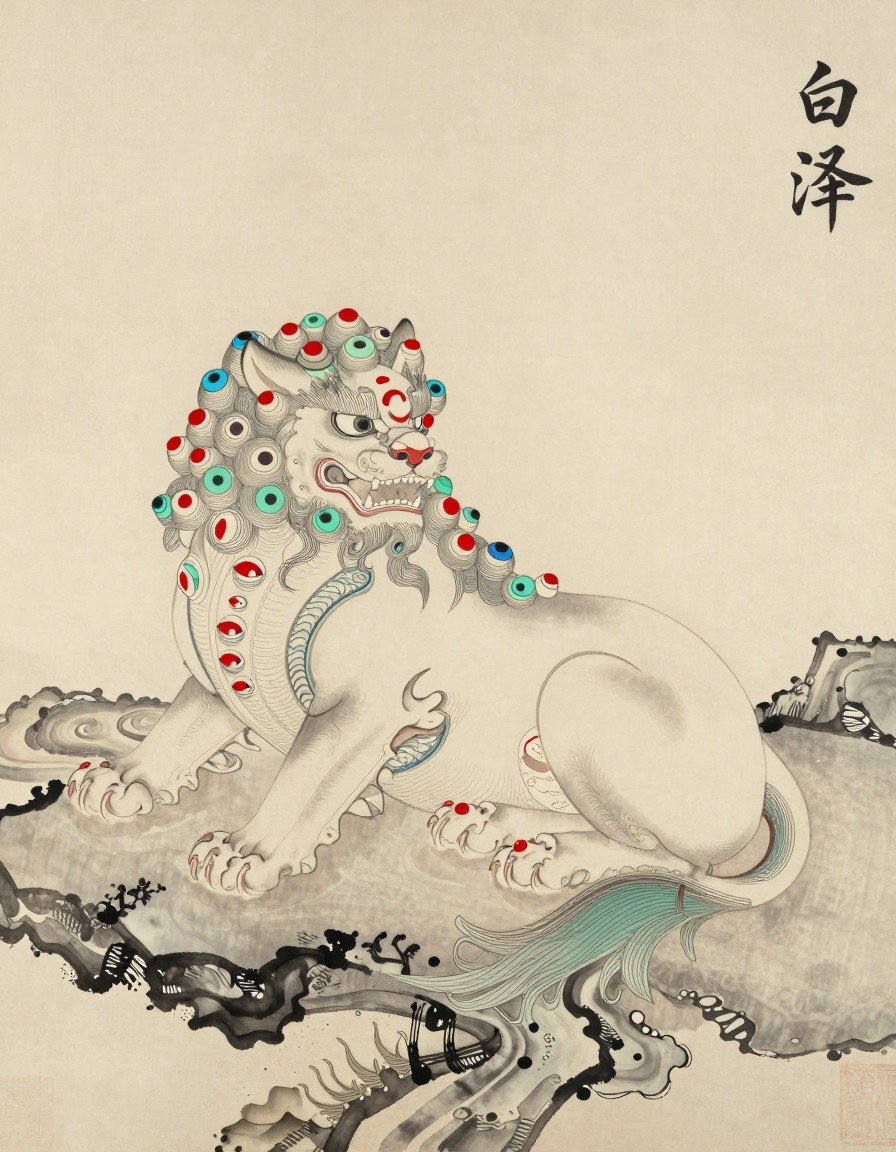
Baize
The Yellow Emperor is said to have met it on Mount Heng. It could speak, and it knew every ghost and spirit in the world along with the way to drive each one off. The emperor had it dictated the 白泽图 — a monster encyclopedia used as an exorcism manual, which later travelled into Japan.